Bonte Farm
Agave schidigera: Compact Thread-Leaf Agave with Striking White Filaments
Agave schidigera: Compact Thread-Leaf Agave with Striking White Filaments
Couldn't load pickup availability
Agave schidigera
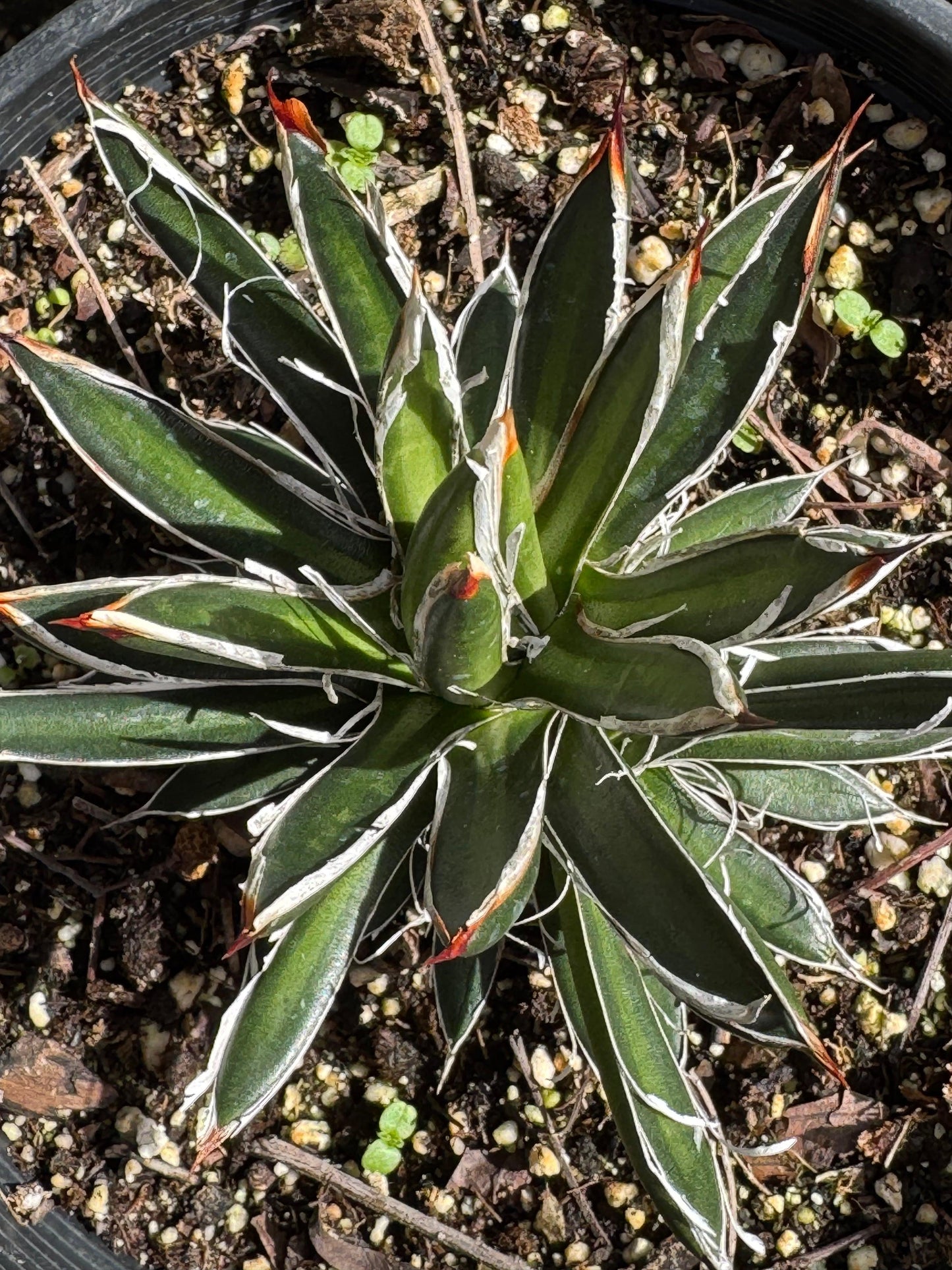
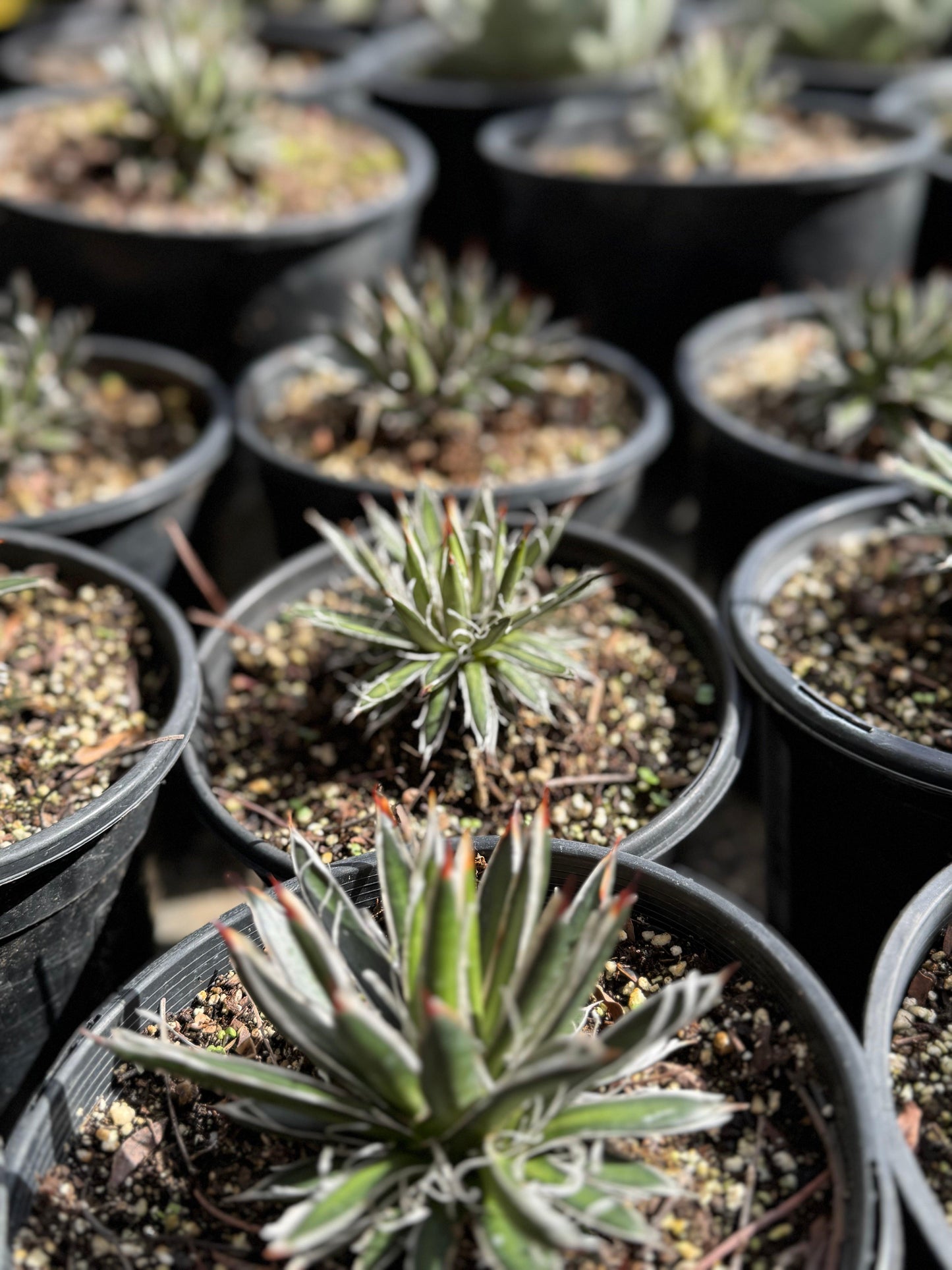
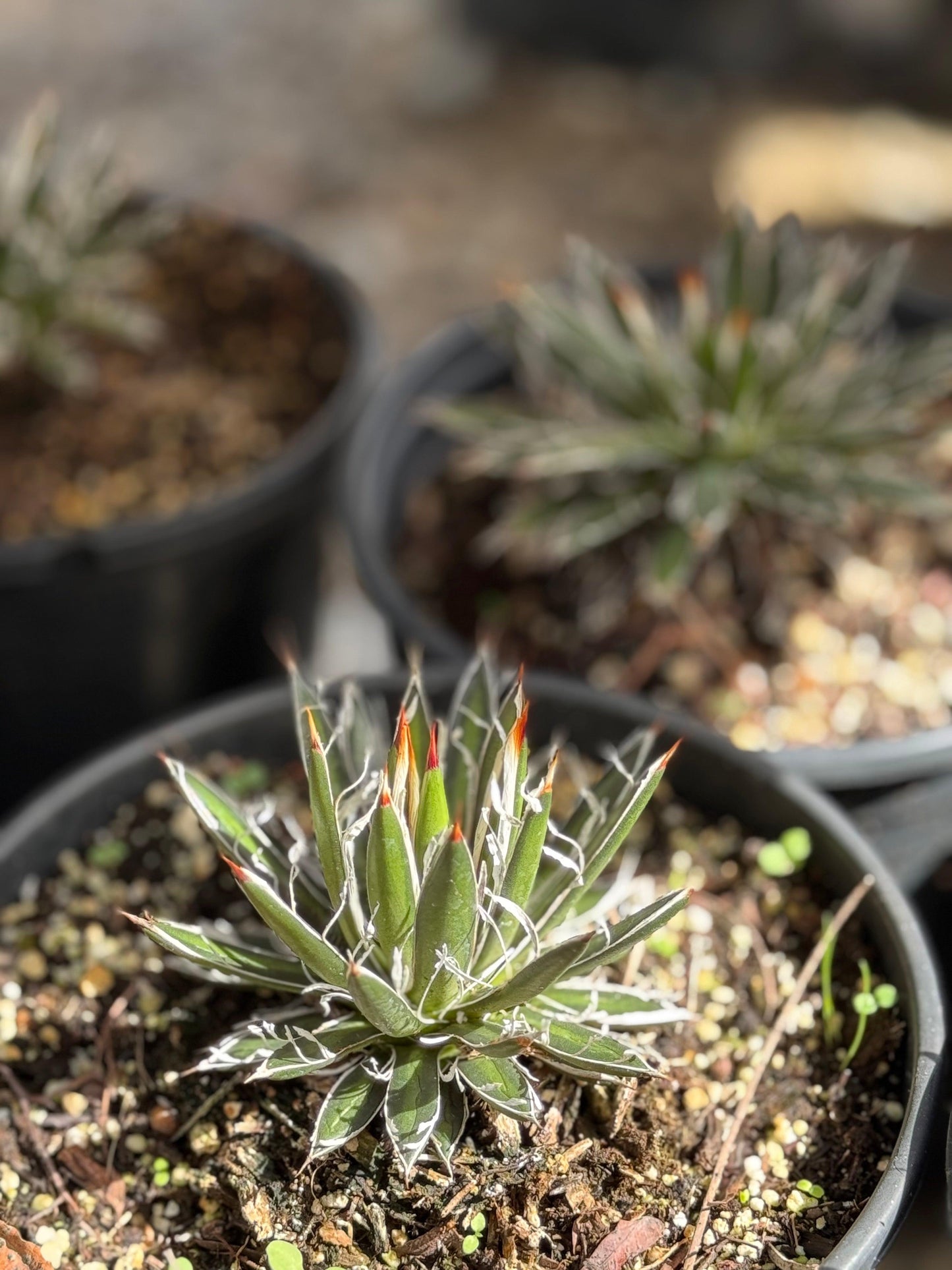
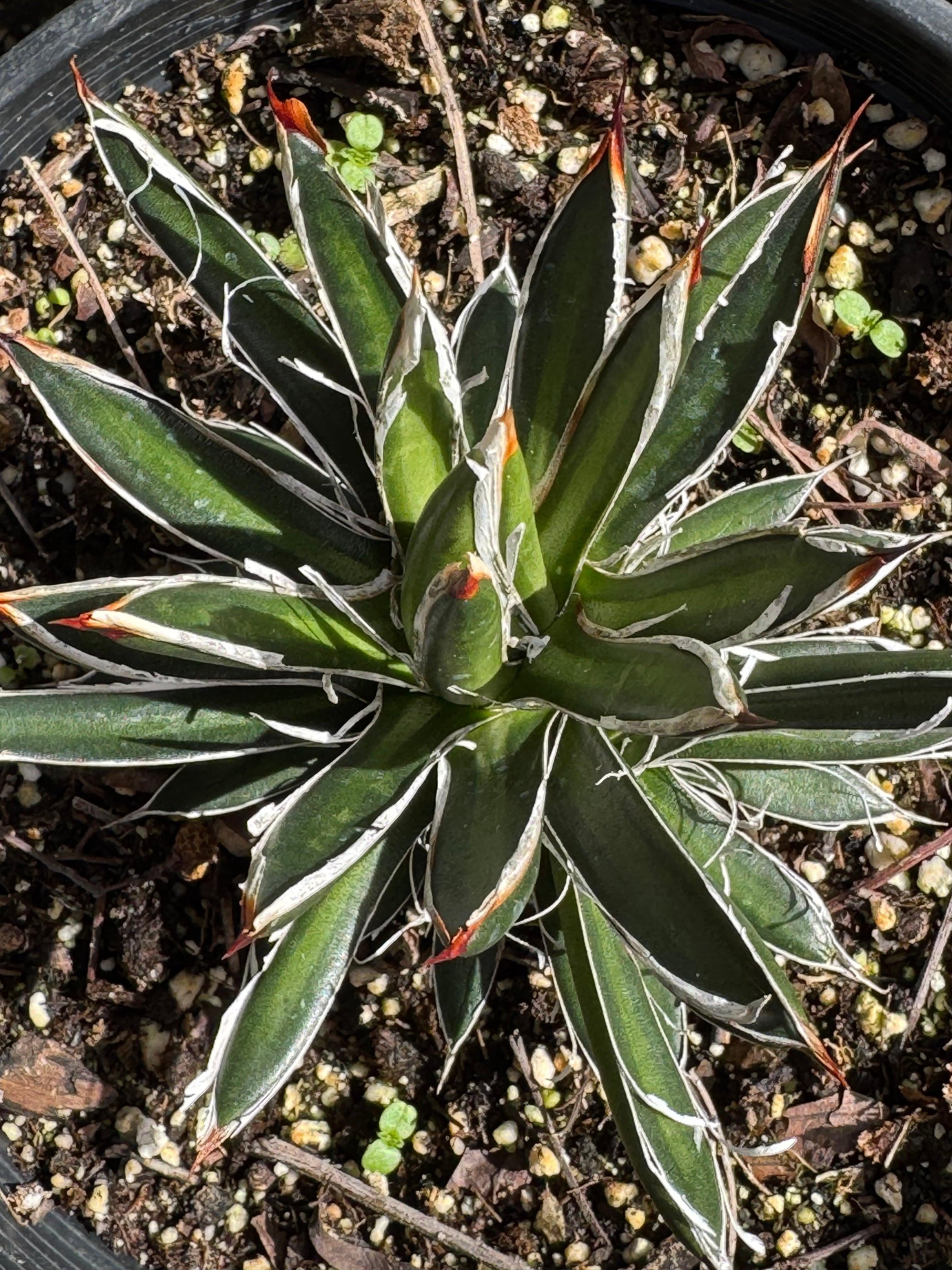
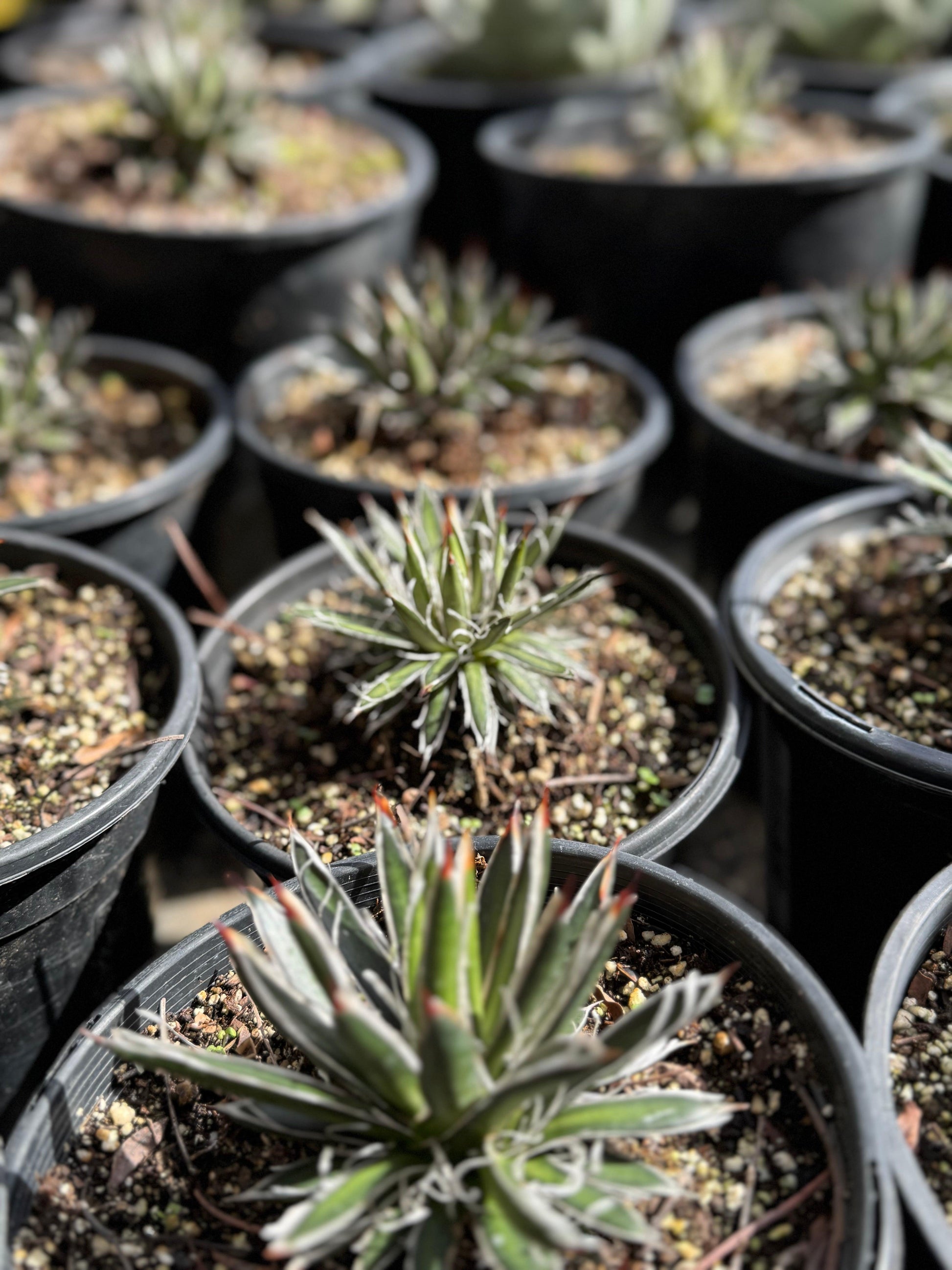
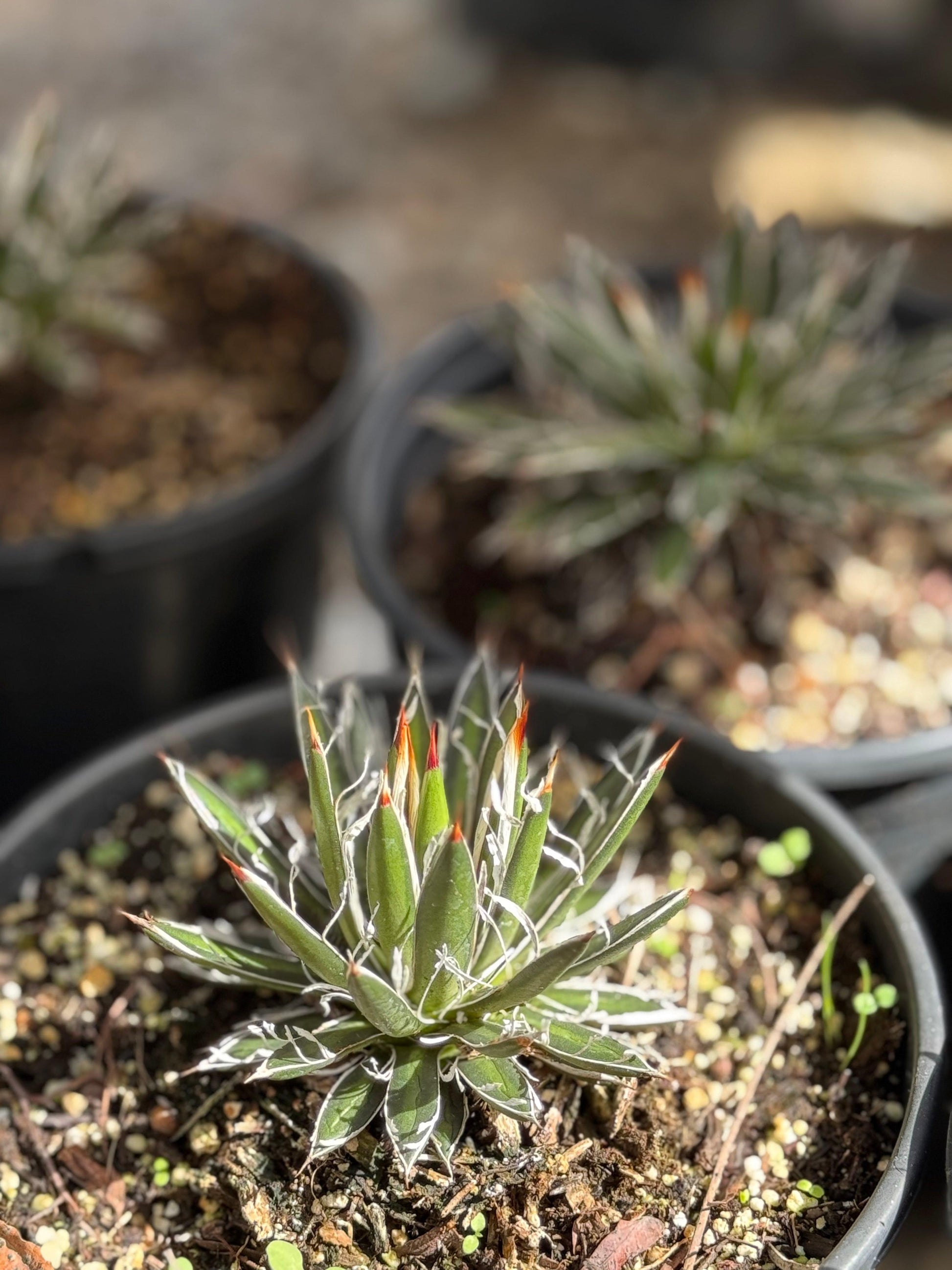
Agave schidigera, commonly known as the Thread‑Leaf Agave, is a compact, highly ornamental species valued for its symmetrical form and distinctive thread‑like filaments. Native to the dry uplands of northern Mexico, this evergreen succulent forms a tight rosette of narrow, rigid leaves that radiate outward in a perfect sphere. Each deep‑green to blue‑green leaf is outlined with delicate white fibers and marked with pale bud‑imprints, giving the plant elegant fine texture from every angle. Its restrained size and striking detail make it ideal for courtyard gardens, containers, rock gardens, and modern desert landscapes.
Slow growing and exceptionally drought tolerant, Agave schidigera performs beautifully in full sun and well‑drained soils. It is more cold‑resilient than many compact agaves, making it suitable for a wide range of dry‑summer climates. Over time, mature plants produce a tall bloom spike topped with clusters of creamy white flowers that attract pollinators. Like other agaves, it is monocarpic, but its long lifespan and occasional offsetting ensure continuity in the landscape.
Whether used as a singular focal point or mass‑planted for striking repetition, Agave schidigera delivers structure, durability, and refined detail with minimal care.
Botanical Characteristics
| Characteristic | Detail |
|---|---|
| Scientific Name | Agave schidigera |
| Common Name(s) | Thread‑Leaf Agave |
| Growth Habit | Compact, solitary rosette |
| Foliage | Narrow dark‑green leaves with white margins, curling threads, and bud‑imprints |
| Flowers | Creamy‑white flowers on a tall branched spike at maturity |
| Flowering Season | Spring to summer when mature (monocarpic) |
| Special Features | Fine white filaments, cold tolerant, drought tolerant, excellent for containers |
Mature Size and Form
Typically 12–18 inches tall and 18–24 inches wide, forming a neat, symmetrical sphere. Mature flower stalks may reach 8–12 feet tall.
USDA Hardiness Zones
Well suited for USDA Zones 7b–11. Cold tolerant compared to many small agaves when planted in well‑drained soil.
Cultivation and Care
| Aspect | Care Instructions |
|---|---|
| Sunlight | Full sun to light partial shade; stronger light enhances color and form |
| Soil | Requires well‑drained, sandy or rocky soil; avoid heavy clay |
| Water | Very low; water sparingly and infrequently once established |
| Fertilizer | Minimal feeding; use diluted low‑nitrogen fertilizer only in spring |
| Pruning | Remove occasional dried lower leaves; minimal grooming needed |
Landscape Uses and Benefits
Perfect for rock gardens, dry borders, courtyard plantings, container specimens, desert landscapes, and minimalist designs. Adds strong geometric form and fine texture.
Wildlife Attraction
Flowering stalks attract hummingbirds, bees, and other pollinators.
Pest and Disease Resistance
Highly resistant to pests; root rot can occur if soil remains wet. Needs excellent drainage.
Propagation
Most commonly propagated by seed. Some individuals produce basal offsets that can be separated and replanted.
Share