

Aloe arborescens x ferox 'Tangerine': Brilliant Orange Winter Torches and Robust Structure
5-gallon (10x10x24" - 36")
$79.00
Skip to product information
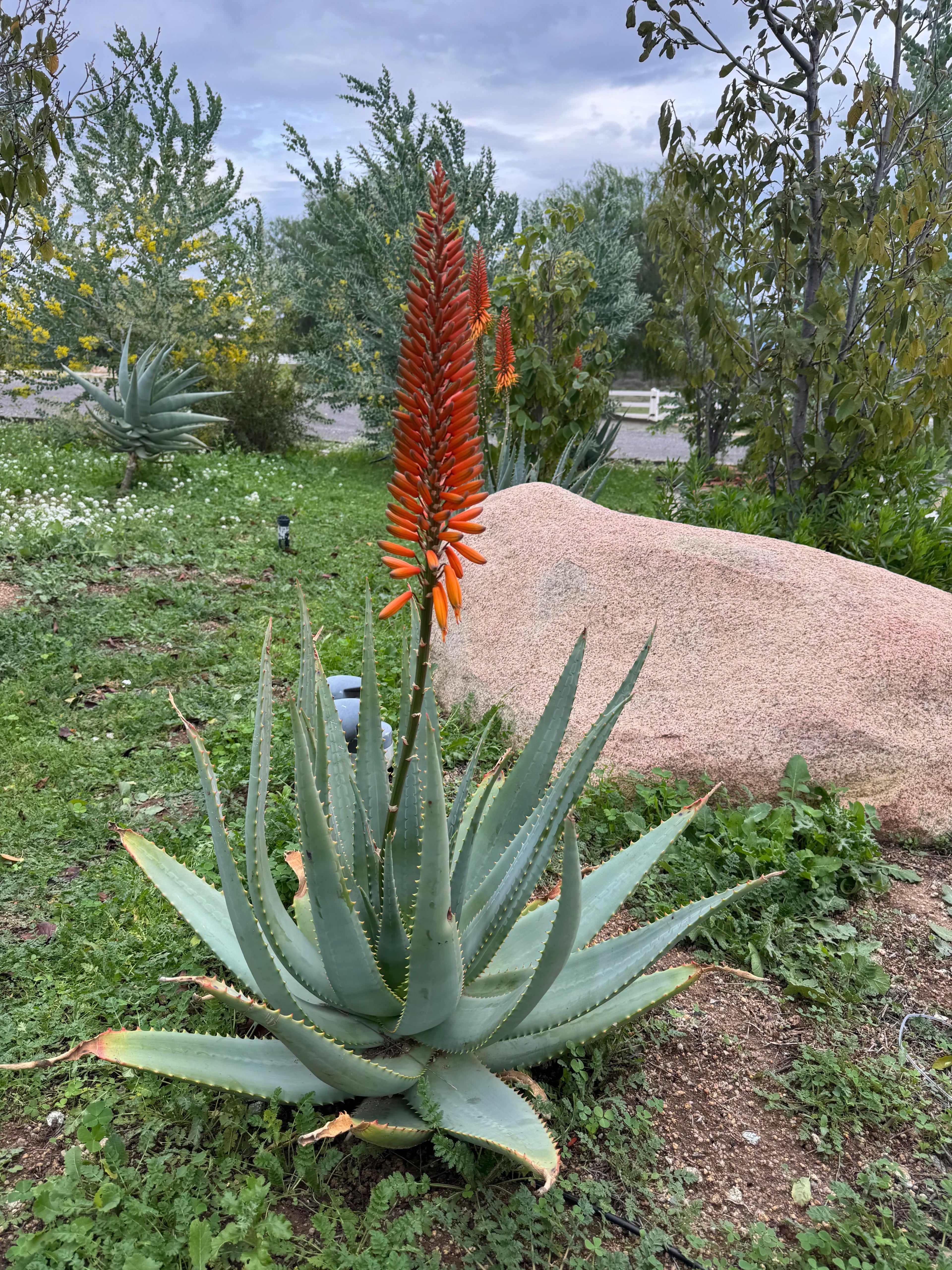
🍊 Aloe ‘Tangerine’


Aloe arborescens x ferox 'Tangerine': Brilliant Orange Winter Torches and Robust Structure
$79.00
🍊 Aloe ‘Tangerine’
Tree‑Like Aloe with Vibrant Orange Winter Flowers
Aloe ‘Tangerine’ is a bold hybrid aloe prized for its upright, branching form and its intensely colored tangerine‑orange flower spikes. Combining the shrubby habit of tree aloes with the robust foliage and strong flower display of large landscape aloes, this cultivar creates a striking architectural presence year‑round. In winter, tall flower spikes rise above the foliage, lighting up the garden with warm, glowing color.
Ideal for water‑wise landscapes, Aloe ‘Tangerine’ delivers dramatic seasonal color with excellent drought tolerance. Its size and structure make it especially effective as a specimen plant, background anchor, or flowering accent in Mediterranean, desert, and coastal gardens.
Plant Characteristics of Aloe ‘Tangerine’
| Characteristic | Detail |
|---|---|
| Common Name | Tangerine Aloe |
| Plant Type | Evergreen succulent shrub |
| Foliage | Blue‑green leaves forming upright rosettes |
| Flowers | Bright tangerine‑orange tubular flowers on tall spikes |
| Bloom Season | Winter to early spring |
| Special Features | Intense flower color, tree‑like habit, excellent winter bloom |
Mature Size and Form
• Height: 6–10 ft
• Spread: 5–8 ft
Aloe ‘Tangerine’ grows into a multi‑stemmed, upright shrub with branching rosettes held above the ground. Its elevated form allows flowers to be displayed prominently, making it especially effective at the back of planting beds or as a freestanding specimen.
USDA Hardiness Zones
Zones 9–11
Thrives in warm coastal and inland climates. Tolerates light frost once established, particularly in fast‑draining soil.
Cultivation and Care for Aloe ‘Tangerine’
| Aspect | Care Instructions |
|---|---|
| Sunlight | Full sun to light shade (best flowering in full sun) |
| Soil | Well‑drained soil; sandy or rocky soil preferred |
| Water | Low; occasional deep watering during prolonged dry periods |
| Fertilizer | Not required; light feeding in spring optional |
| Maintenance | Remove spent flower stalks and prune lightly to shape if needed |
Landscape Use and Benefits of Aloe ‘Tangerine’
• Eye‑catching winter‑blooming aloe with intense orange color
• Excellent specimen or backdrop plant in warm‑climate gardens
• Ideal for desert, Mediterranean, and
water‑wise gardens
• Provides strong vertical structure and seasonal interest
• A vibrant highlight within curated
succulent collections
Wildlife Attraction
The nectar‑rich winter flowers attract hummingbirds, bees, and other pollinators, providing valuable food sources during cooler months.
Pest and Disease Considerations
Aloe ‘Tangerine’ is sturdy and low‑maintenance when planted correctly. Potential considerations include:
• Root rot in poorly drained soil
• Reduced flowering in heavy shade
• Minor leaf damage during hard freezes
Excellent drainage, bright light, and restrained watering ensure long‑term health and outstanding floral performance.